

Hello, I’m Kerim Akgül.
I show what happens
inside machines.
I’m a 3D artist and make films for products that are hard to show: machines, components and industrial software. Research, scene plan, model, animation and edit are all done by me, in my studio in Gronau, Germany.

01Point of viewWhat every film has to pass
First it has to be right.Then it can be beautiful.
A film about a machine is watched by people who know machines. An engineer notices in a second when a piston runs wrong. After that, not even the best lighting can save the film.
That’s why every film starts with questions, not images. Your engineers check the stills before I animate. Whatever is wrong there never makes it into the film.
The film will still be beautiful. Every light and every camera move leads the eye to what your customer needs to understand. Effects your machine doesn’t have stay out.
02ApproachThe same in every project
How I work with you.
Every project is different. These three things are always the same, whether it is a single component or a whole plant.
- 01
The question first
A good industrial film starts with the question of what your customers need to understand. Where does it run, who sees it? Only then do I plan the first scene.
- 02
Getting to know it
I read your website, data sheets and presentations and learn the terminology. I won’t become an engineer, but I learn enough to show nothing that’s wrong.
- 03
Directly with me
From the first question to the finished film you talk to me. You approve the scene plan and the stills; your engineers need about half an hour for each.
03CraftDecisions you can see in the frame
What makes a frame believable.
Whether a film looks real rarely depends on the software. It depends on many small decisions about data, materials, light and motion. These are the most important ones.
- 01CAD data
I mesh round parts finely and flat sheet metal coarsely.
Why: Too coarse, and shafts get edges. Too fine, and millions of triangles make every scene sluggish.
- 02Model
Edges get bevels, and pivots sit on the real axes.
Why: In CAD, edges are razor-sharp; real edges catch light. And only real axes turn the right way.
- 03Cross-section
Fixed sections are really cut; moving ones only at render time.
Why: A fixed cut stays exact, and a moving one can travel through the running machine.
- 04Motion
At the key moment I show fast parts in slow motion.
Why: Otherwise a wheel at full speed looks as if it is standing still or turning backwards.
- 05Light
I light like a photographer in a studio, with targeted rim lights.
Why: The rim light traces the shape, and everything unimportant disappears into the dark.
- 06Camera
The virtual camera behaves like a real one, with long focal lengths.
Why: Short focal lengths distort a machine like a phone photo. Gentle starts and stops look real.
Technical data
- Data
- CAD as STEP, or a brochure, photos, video
- 3D and rendering
- Blender with Cycles
- Simulation
- Houdini
- 2D and 2.5D
- After Effects
- Edit, colour and sound
- DaVinci Resolve
- Output
- MP4 in Full HD, on request in portrait 9:16
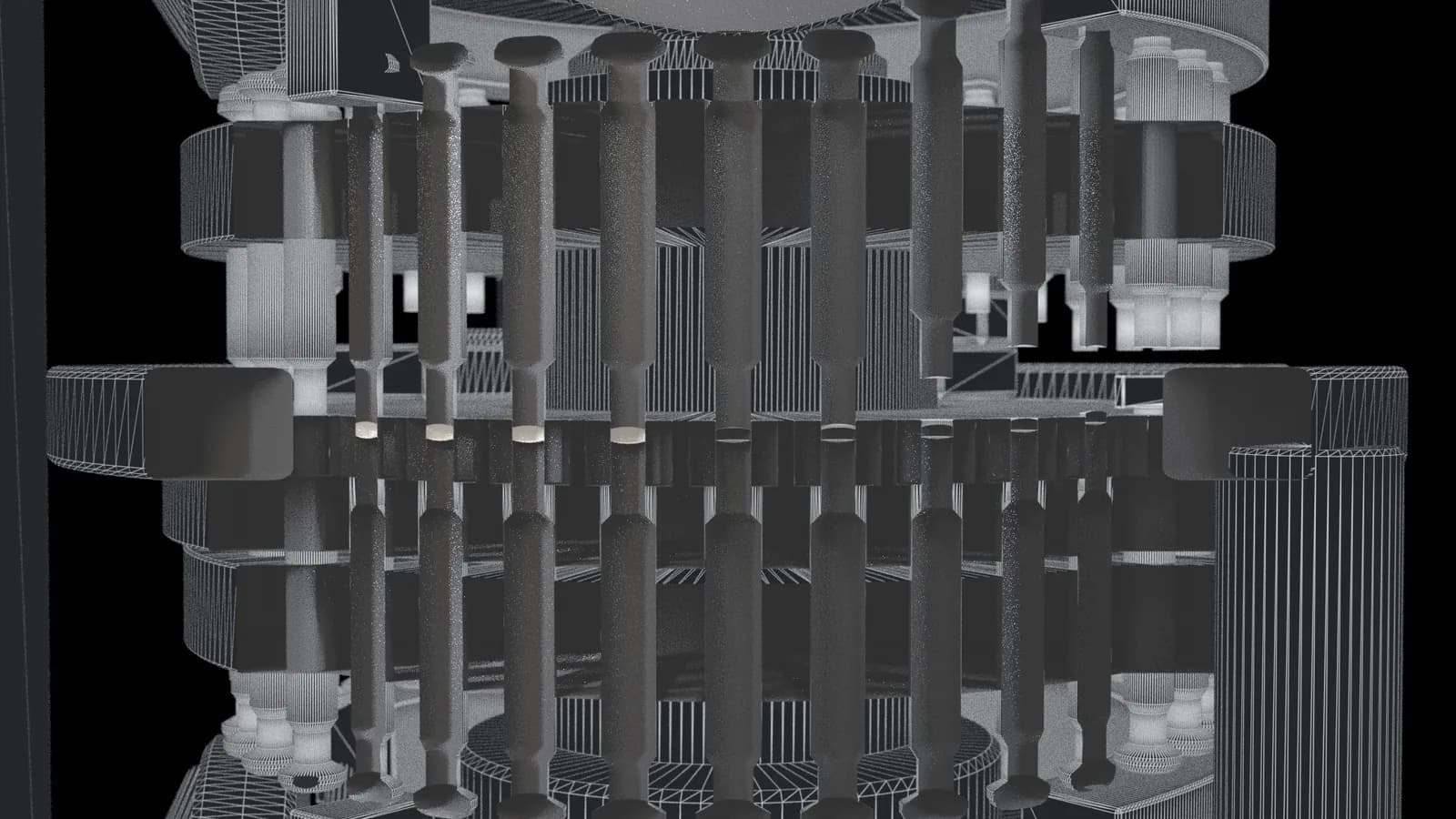
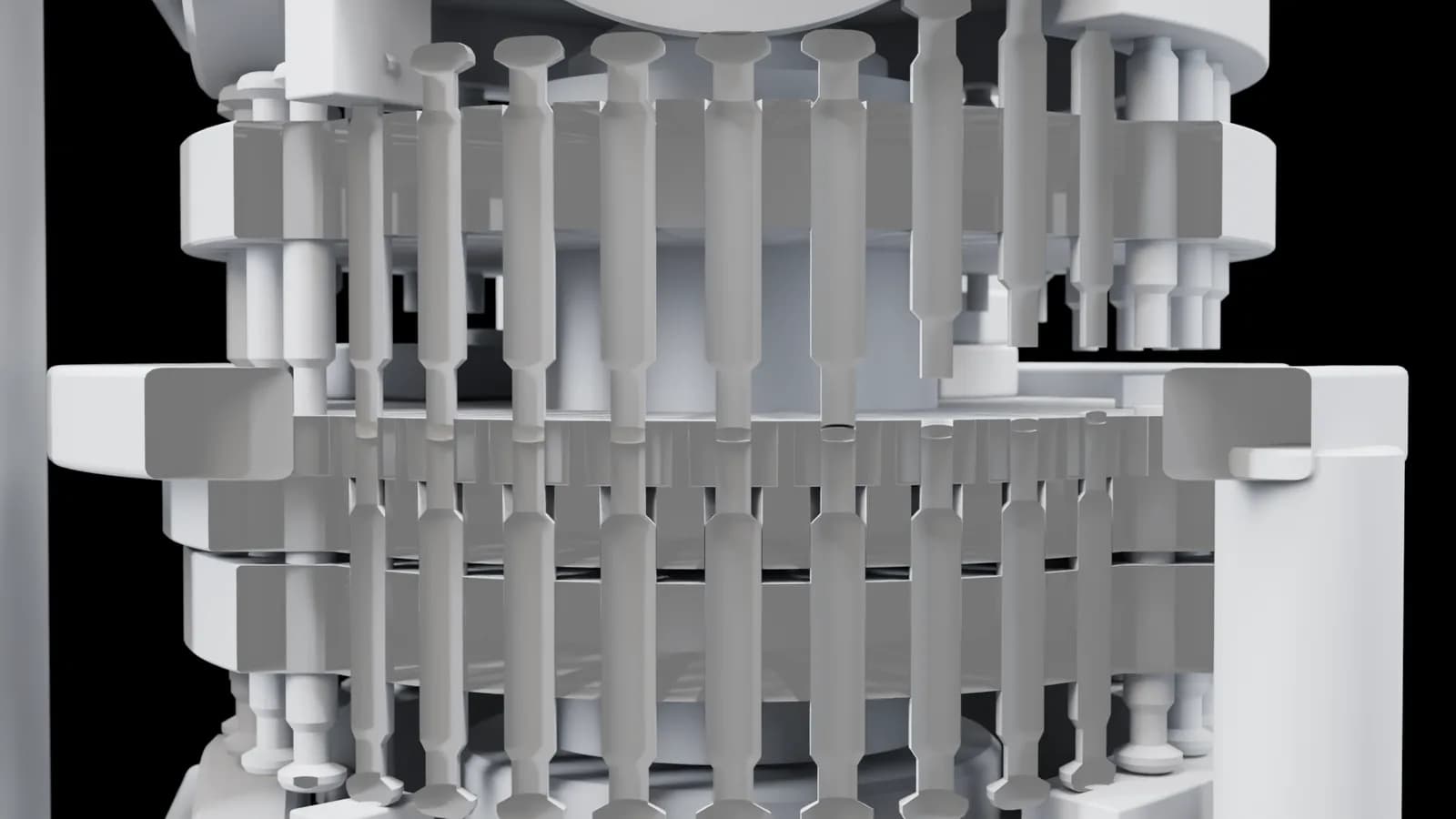
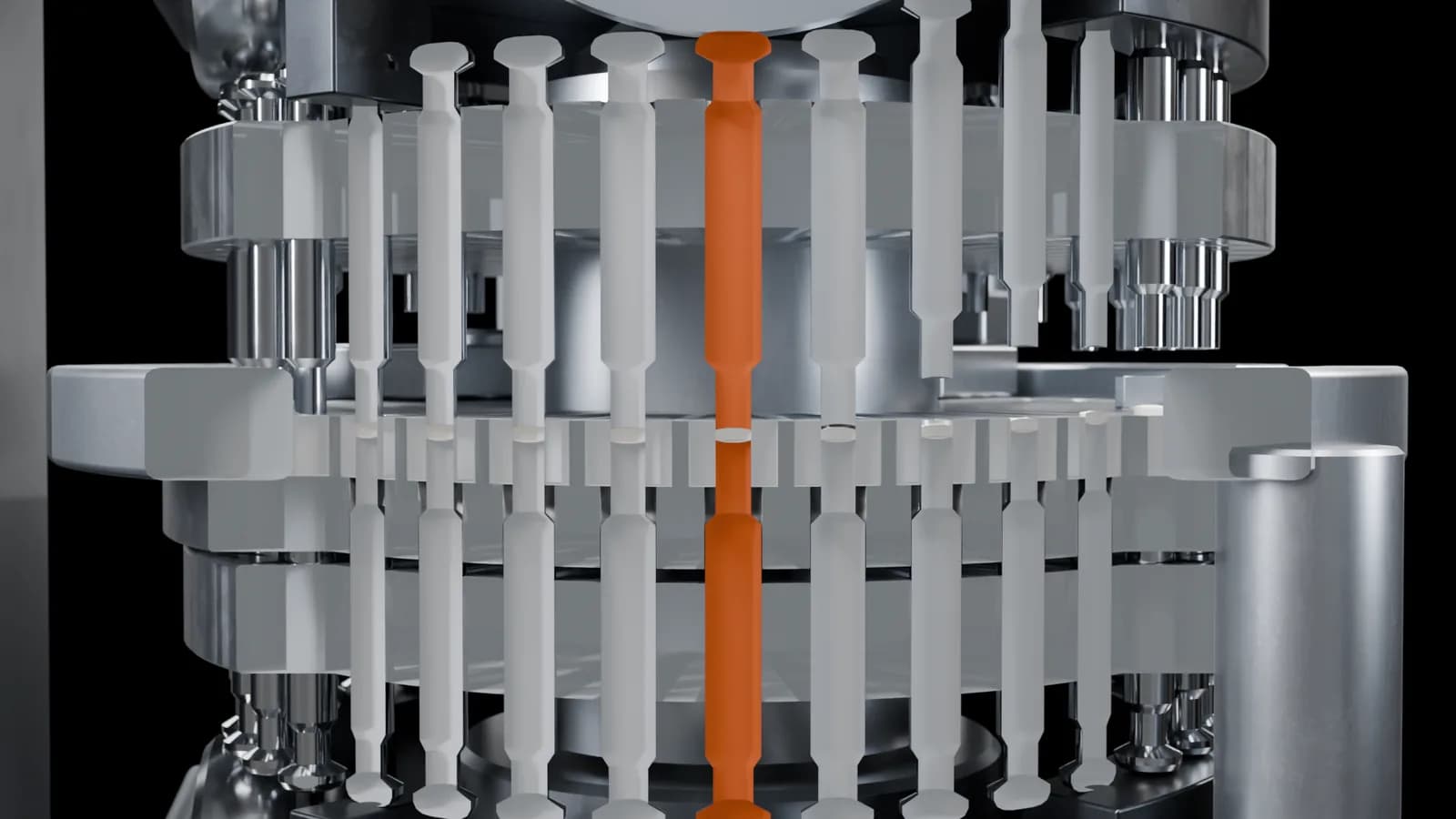
04One shotHARTENAU, scene 5
One shot, three stages.
The cut through the running turret from the HARTENAU film. All three stages are the same shot of the same scene, only rendered differently.
05KnowledgeFive articles from the journal
What I know, I write down.
In the journal I explain the technique behind my films, from the CAD data to the finished frame. One article also covers when you’re better off filming than animating.
- 01Cutaway animationHow a sectional drawing becomes a film.→
- 02CAD dataFormats, preparation and how your data stays protected.→
- 03RealismWhy animations look artificial and how to do better.→
- 04Trade fair filmThe timeline counted back from the first day of the show.→
- 05Shoot or 3DWhen real footage is better and when animation is.→
Tell me what you have in mind.
A product link or a rough idea is enough to start.