01
On the stand, your film gets a few seconds
Picture the aisle in front of your stand: voices, trolleys, people holding coffee. Your film is running on the screen, without sound. A visitor turns their head as they walk past. What they see in those seconds decides whether they stop.
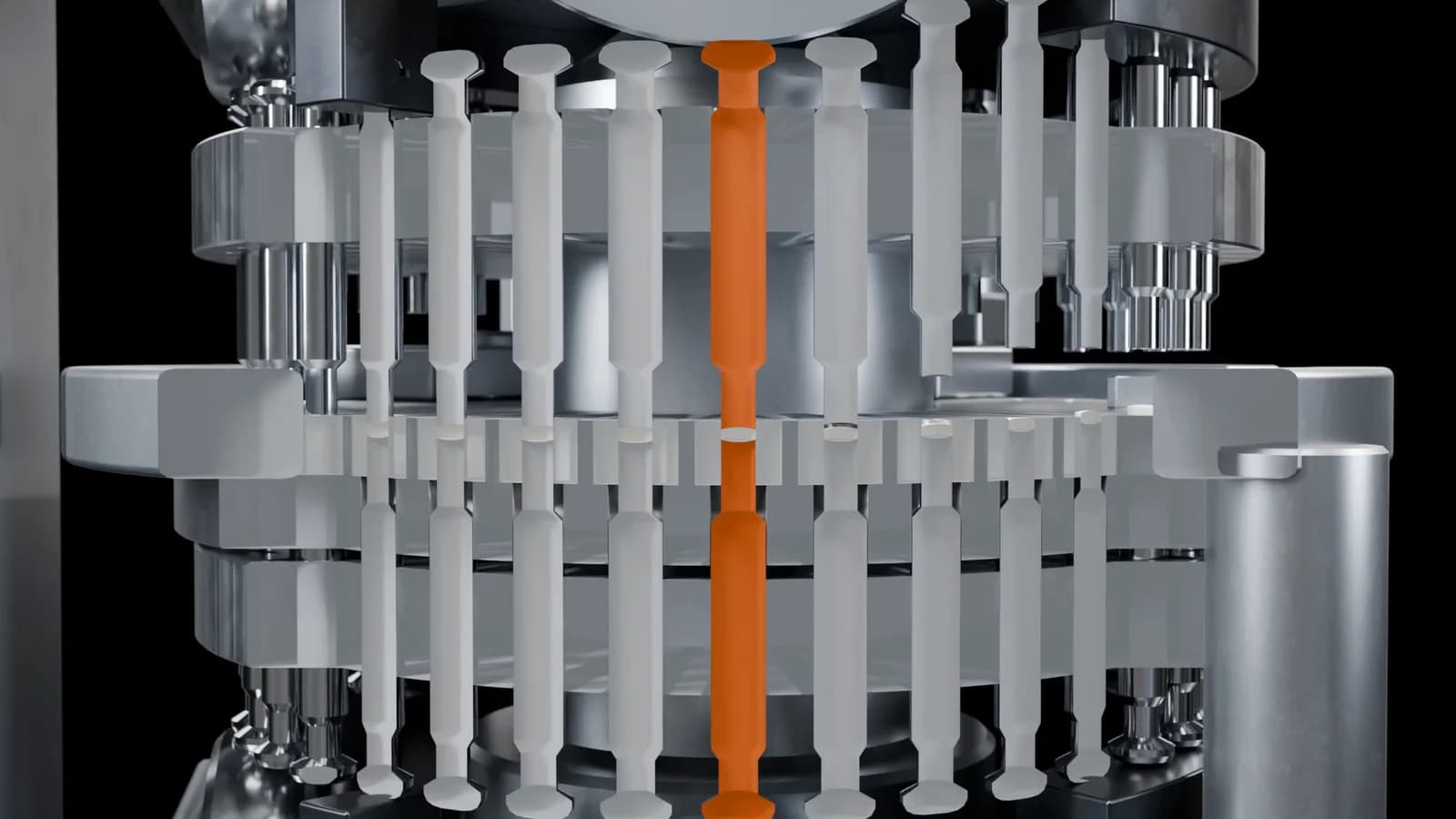
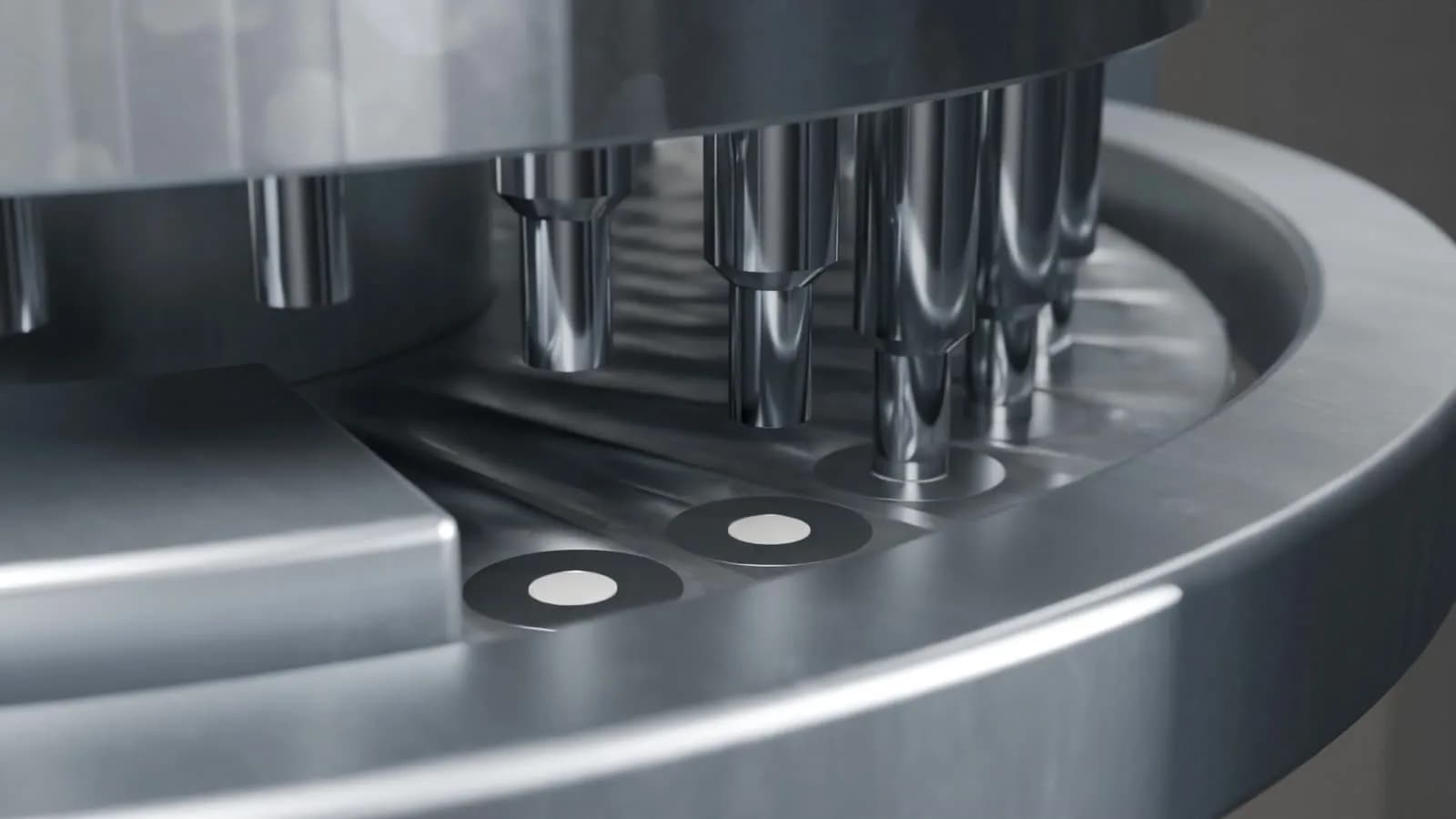
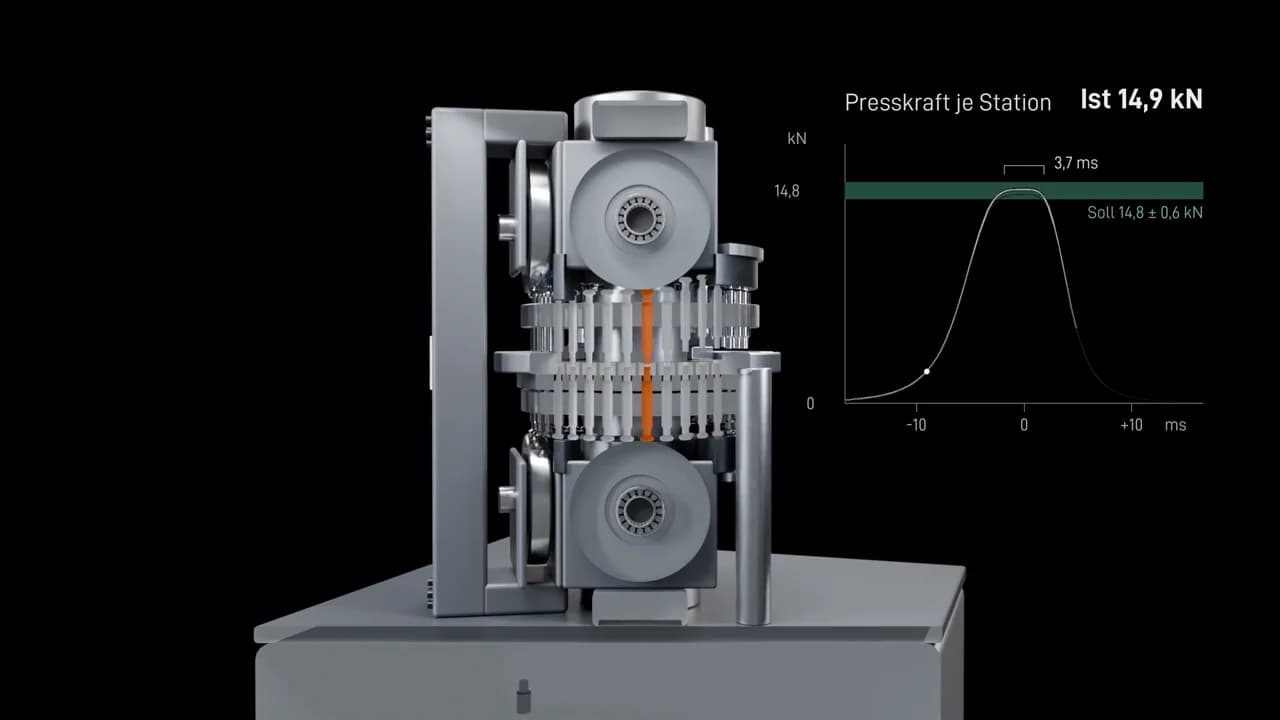
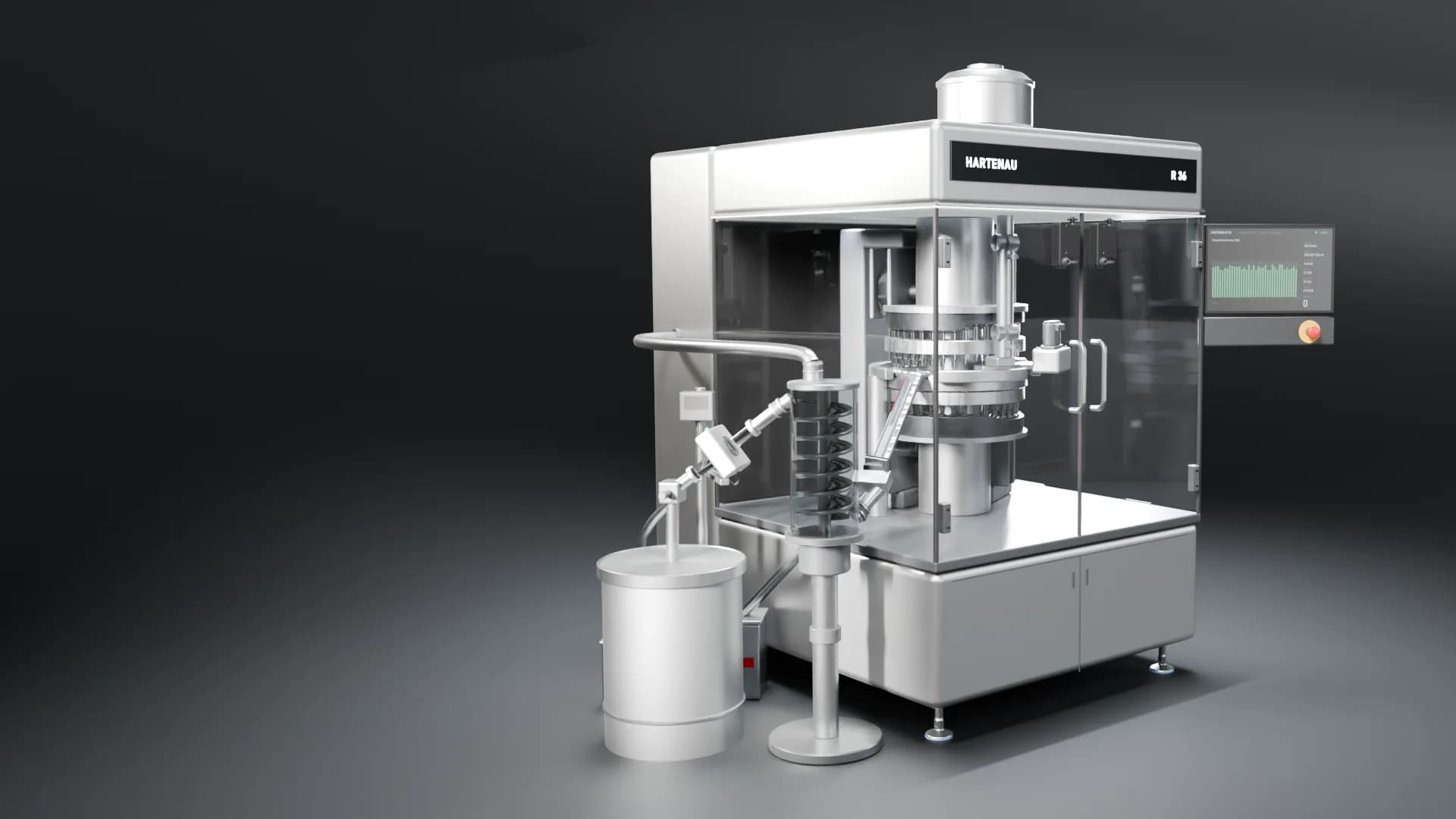
That is why a trade fair film is not a shortened corporate film. It has one job: to trigger a question your team on the stand can answer. It works best with what the real machine next to it cannot show: the inside in cross-section, a process in slow motion, a whole shift in seconds. The machine proves it exists. The film shows why it is better.
- Clear without sound, because nobody hears it in the hall
- Readable from any scene, because nobody watches from second zero
- One idea instead of a feature list
- A few large words, readable from five metres
- A loop where nobody notices the start
02
Ten weeks, counted backwards
I always count back from the first day of the show. A film usually takes about five weeks from the start. Before that come the scene plan, the quote and your order; after it, the stand test and a buffer. For Hannover Messe on 5 April 2027 that means the enquiry should go out by the end of January.
The bottleneck is rarely the animation. It is the approvals. Someone from your engineering team reviews the stills and the preview, about half an hour each, and those slots need to be in the calendar. If production falls over the holidays: 24 December to 1 January do not count as working days for me.
If time is shorter, ask anyway. The scene plan then states honestly what is possible before the show, and the quote names a fixed delivery date.
Timeline in reverse
Your show date, counted back week by week.
First day of the show
- Enquire by
- Monday 25 January 2027
- Film ready
- 15 March 2027
- Hannover Messe
- 5 April 2027
- CW 425 JanEnquiryA link or a few sentences about the machineYou
- CW 51 FebScene plan with a fixed priceUsually within three working daysMe
- CW 68 FebOrder and startBy email; production starts with the first halfYou
- CW 715 FebStillsThree to six, depending on scopeMe
- CW 715 FebReview the stillsYour engineers, about half an hourYou
- CW 822 FebAnimation and previewThe whole film in motionMe
- CW 108 MarReview the previewAbout half an hour, up to two roundsYou
- CW 1115 MarFinished filmWith German text, English text and withoutMe
- CW 1222 MarStand testOn the real screen at the standYou
- CW 1329 MarBufferFor the unexpected
- CW 145 AprHannover Messe
03
What a trade fair film costs
I work at fixed prices. Most of my films cost between €2,200 and €2,800; where one lands depends mainly on how many assemblies move. The price is set before you order, no extra costs are added, and the amount in the quote is the amount on the invoice.
Especially important for trade fairs: every film comes in three versions, with German text, with English text and without text. The same film runs in Hanover, in Milan and at a dealer overseas. Another language costs €50, a portrait version for a pillar €90.
04
What I need from you, and what I don’t
For the scene plan, a link or a few sentences are enough. For the film itself, CAD data is ideal, preferably as STEP. Without CAD I build the model from a brochure, photos or an existing video. You don’t need a finished concept; that is my job.
New products are often confidential until the show opens. I sign a non-disclosure agreement before any data arrives and show the film only after you have published it, if you agree. And because an animation needs no finished machine, the film can be made while the prototype is still being assembled.
- Show, hall and stand
- CAD data, or a brochure, photos, video
- Screen on the stand: format, size, distance
- One person from engineering for approvals
05
After the show, the film keeps working
On the last day of the show, the film really starts working. It then runs on the product page, in sales meetings, as a link in quotes, on LinkedIn and with your dealers. The rights are unlimited in time and territory.
If it should later run on the website with a voiceover, I plan for that from the start: on-screen text and narration have to fit together. In the scene plan that is one line. Afterwards it would be a rebuild.
06
Five mistakes you see at every show
Walk through a hall once and look only at the screens. You will see these five mistakes again and again. Almost all of them happen before production, not after.
- Started too late: no time left for approvals and the stand test.
- Ten seconds of logo at the start: whoever walks past sees only the logo.
- Too much text: what cannot be read from five metres is wasted.
- Format not agreed: there is no 9:16 version for the portrait pillar.
- Sound assumed: nobody hears it on the stand.
Try this: The stand test
Hold up the most important still from the scene plan from five metres away, without sound and without explaining. Does someone who doesn’t know your machine understand what it is about?
07
Common questions
How far ahead of the show should I commission a trade fair film?
Plan for about ten weeks before the first day. Production usually takes about five weeks from the start, with the scene plan and order before it and the stand test and a buffer after it.
Can the film be made before the machine is finished?
Yes. An animation is built from CAD data or documents and needs no finished machine, so it can be made while the prototype is assembled.
What does a trade fair film for a machine cost?
At FORMFOLGE most films cost between €2,200 and €2,800, as a fixed and final price. Versions with German and English on-screen text and one without text are included.
Do I need separate versions for monitor, pillar and website?
Often, yes. A portrait pillar needs its own 9:16 version, and on the website the film may have sound. If that is clear early, I plan the scenes for every screen.
Will my new product stay confidential until the show?
Yes. I sign a non-disclosure agreement before you send data and show the film as a reference only after you have published it and with your approval.